For homeowners in Scarsdale, the sight of a new crack in the basement wall can be more than just an aesthetic annoyance—it can be a source of significant anxiety. In an area known for its historic architecture and variable soil conditions, foundation health is paramount to maintaining property value. However, not every crack requires a total foundation overhaul, just as not every crack can be fixed with a simple sealant. Understanding the difference between a cosmetic issue and a structural threat is the first step toward a “No-Hassle” restoration process.
Identifying High-Risk Foundation Cracks in New York Homes
The geology of Westchester County, particularly around Scarsdale and White Plains, presents unique challenges for residential foundations. Between the heavy clay content in certain pockets and the intense freeze-thaw cycles of New York winters, concrete is under constant pressure. When evaluating a crack, Sundahl Restoration experts look at three primary factors: orientation, width, and movement.
Horizontal vs. Vertical Cracking: Which is a Structural Threat?
Vertical cracks are relatively common in concrete foundations and are often the result of minor settling or the natural curing process of the concrete. While they can allow water seepage, they rarely signal an imminent structural failure. However, horizontal cracks are a major red flag. A horizontal line running mid-way up your basement wall typically indicates that the soil outside is exerting excessive “hydrostatic pressure,” causing the wall to bow inward.
The “Nickel Test” for Monitoring Crack Expansion
If you discover a crack, a simple way to monitor it is the “nickel test.” If a crack is wide enough to fit a nickel, or if you notice that the edges are no longer flush (one side is protruding further than the other), the crack is likely “active.” Active cracks require immediate professional intervention to prevent further shifting of the home’s envelope.
The Science of Crack Injection: Epoxy vs. Polyurethane
When a crack is determined to be non-structural but is allowing water to enter the basement, injection is the preferred professional solution. At Sundahl Waterproofing Restoration, LLC, we don’t believe in surface patches that simply peel off over time. We utilize high-pressure injection to ensure the crack is sealed from the inside out.
Epoxy Injection: This is used when structural strength is needed. Epoxy is stronger than the concrete itself once cured, effectively welding the crack back together. It is the gold standard for stabilizing “dormant” cracks that have finished moving.
Polyurethane Injection: Because polyurethane is flexible and expands up to 20 times its liquid volume, it is the superior choice for stoping active water leaks. It fills every void and remains flexible, allowing it to withstand the slight natural movements of the New York soil without breaking the seal.
Why Stabilization is the High-Value Choice for Bowing Walls
When a foundation wall begins to bow or lean, injection alone is insufficient. This is where stabilization becomes the highest-priority restoration service. Ignoring a bowing wall can lead to catastrophic structural failure and a massive decrease in home equity. Our consultative approach focuses on permanent, non-invasive stabilization methods that protect your home without the need for massive excavation.
We often utilize Carbon Fiber Reinforcement. These aerospace-grade straps are bonded to the interior foundation wall using high-strength epoxy. They are thinner than a penny, meaning they can be painted over or covered by drywall, yet they are stronger than steel and prevent the wall from further inward movement. This is the ultimate “No-Hassle” solution for the modern Scarsdale homeowner.
Protecting the Equity of Your Westchester County Property
In the high-end Scarsdale real estate market, a basement with signs of water damage or structural instability can result in a price reduction far exceeding the cost of the actual repair. Proactive restoration isn’t just about safety; it’s about financial wisdom. By choosing a specialized firm like Sundahl Restoration, you are investing in a transferrable warranty and the peace of mind that your home’s “bones” are secure.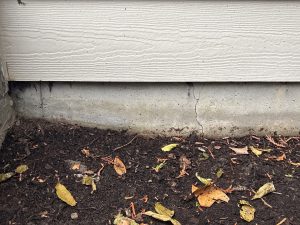
Frequently Asked Questions
Can I just patch a foundation crack with hydraulic cement?
Hydraulic cement is a temporary surface fix. In the New York climate, it will eventually fail because it doesn’t bond structurally to the interior of the crack. Professional injection reaches the exterior soil line, providing a total seal that surface patches cannot match.
How do I know if my foundation walls are bowing?
Look for horizontal cracks or leaning at the top of the wall. You can also use a long level or a plumb bob to check for deflection. Even a 1-inch inward curve is a signal that the structural integrity of the wall is being compromised by soil pressure.
Is structural stabilization loud or disruptive?
Our stabilization methods, such as carbon fiber strapping, are remarkably quiet and non-invasive. Unlike older methods that required digging up your yard to install heavy anchors, carbon fiber is installed entirely from the inside with minimal dust and no heavy machinery.
Structural issues don’t fix themselves. Secure your home’s future with a professional foundation assessment from Sundahl Restoration today.