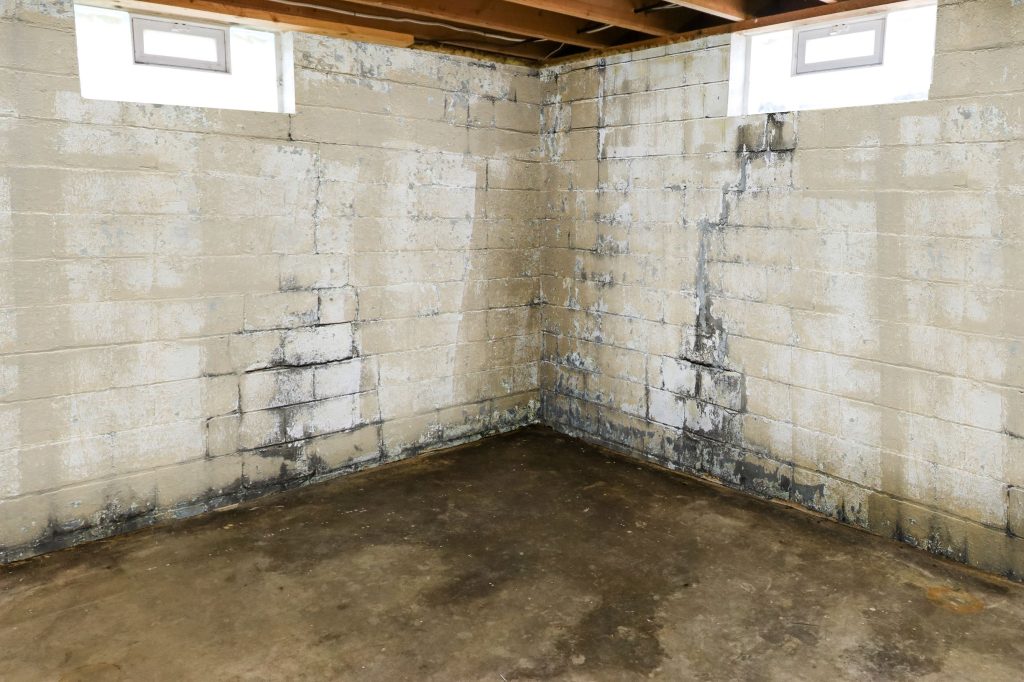
If you’ve ever walked down your basement stairs after a heavy rainstorm in Westchester, Fairfield, or surrounding counties only to find water pooling right where the floor meets the wall, you aren’t alone. This specific leak location—known as the cove joint—is one of the most frustrating problems for homeowners across New York and Connecticut.
What Is the Basement “Cove Joint” and Why Does It Leak?

To understand why water enters here, you have to look at how basements are poured. Builders construct homes in stages: first the concrete wall footings, then the foundation walls, and finally the concrete basement floor slab. When the floor slab is poured against the wall, a seam is created.
This seam is called the cove joint (or “cold joint”). Because fresh concrete doesn’t chemically bond to cured concrete, this gap remains an open seam for the life of your home.
The Driver: Unseen Hydrostatic Pressure
The seam itself isn’t the primary problem—the water pushing through it is. During heavy rainstorms or rapid spring snowmelts in the Hudson Valley and Coastal Connecticut, wet clay soils surrounding your home become oversaturated.
This trapped groundwater exerts immense physical force, known as hydrostatic pressure. As thousands of pounds of pressure build beneath your foundation, the water actively seeks the path of least resistance. That path is almost always the unsealed cove joint.
Why DIY Patches and Waterproof Paints Always Fail at the Cove Joint
When water appears, many homeowners naturally head to the local hardware store for hydraulic cement, silicone caulk, or thick waterproof paints. Unfortunately, these surface treatments fail for two reasons:
- Natural Slab Expansion: Concrete floor slabs expand and contract as humidity and temperatures change. Rigid hydraulic cement quickly fractures and pops out under normal floor movement.
- Unrelieved Hydrostatic Pressure: Sealing the top of the seam does nothing to eliminate the water pressure underneath. Groundwater simply accumulates until it builds enough force to push past the patch or find another entry point, such as floor cracks.
Key Takeaway: Surface sealants treat the symptom, not the cause. Trying to stop hydrostatic pressure with caulk is like putting tape over a leaking pipe—the pressure always wins.
The Permanent Solution: Sub-Slab Interior Drain Tile Systems
To permanently solve cove joint leaks, you must eliminate the water pressure before it reaches your basement floor. The industry gold standard for doing this is a full interior perimeter drain tile system.
Here is how a professional interior drainage system protects your home:
- Pressure Relief Channel: Specialists carefully open a narrow channel along the perimeter floor slab to expose the footings where water accumulates.
- Perforated Drainage Tubing: Heavy-duty, perforated drain pipe is installed inside a bed of washed aggregate stone. This creates an immediate low-resistance pathway for groundwater.
- Wall Vapor Shielding: A durable wall barrier directs any wall dampness straight down into the sub-slab channel.
- Dual-Pump Sump Discharge: The collected groundwater flows naturally by gravity into a heavy-duty sump basin, where a primary pump (equipped with a battery backup) safely routes the water away from your foundation.
- Concrete Restoration: Fresh concrete is poured flush over the channel, leaving your basement floor clean, dry, and ready to be finished.
Frequently Asked Questions
Will sealing the crack between my floor and wall stop water permanently?
No. Caulk and hydraulic cement cannot withstand sub-slab hydrostatic pressure. The water will eventually break through the sealant or find a new path through adjacent floor cracks.
How long does an interior drain tile system installation take?
For most suburban homes in New York and Connecticut, a complete interior drainage installation takes between 2 and 4 days, depending on linear footage and basement access.
Will an interior drainage system help remove musty basement odors?
Yes! By trapping groundwater underground and discharging it before it evaporates into your living space, relative humidity levels drop, stopping the conditions that cause musty odors.
Permanently Eliminate Cove Joint Water Seepage
Don’t waste time and money on temporary surface patches that fail during the next big Tri-State storm. The experienced team at Sundahl Waterproofing designs engineered interior drainage systems built to keep your foundation dry for life.
Contact us today to schedule your zero-pressure, on-site basement inspection across Westchester, Putnam, Fairfield, and surrounding NY & CT counties.