How Foundation Cracks Threaten Your Home’s Safety
Water in your basement is more than an inconvenience — it’s a signal that your home needs attention. The good news? Once you understand what’s happening and why, the path to a permanently dry basement becomes remarkably clear. Whether you’re noticing damp walls after a rainstorm, small puddles forming near your foundation, or a persistent musty smell downstairs, effective basement drainage solutions exist that can resolve these issues for good. At Sundahl Waterproofing, we’ve helped thousands of homeowners across Westchester, Fairfield, and surrounding counties transform troubled basements into dry, usable spaces. Let’s walk through exactly how drainage systems work and which approach might be right for your home.
Common Basement Water Problems and Their Causes
Before choosing a solution, it helps to understand where basement water actually comes from. In most homes throughout the Northeast, water enters the basement through one or more predictable pathways.
Hydrostatic Pressure
When the soil surrounding your foundation becomes saturated with rain or snowmelt, it creates pressure against your basement walls and floor. This hydrostatic pressure pushes water through even the smallest cracks, joints, and porous areas in your concrete. It’s the most common cause of wet basement repair calls we receive, and it’s entirely manageable with the right drainage approach.
Poor Surface Grading and Gutter Issues
Sometimes the problem starts above ground. If the landscape around your home slopes toward the foundation rather than away from it, rainwater naturally collects where you least want it. Clogged or improperly directed gutters compound this issue by depositing large volumes of water right next to your foundation walls.
Cracks in Walls and Floors
Foundation cracks develop naturally over time as concrete cures and your home settles. While not every crack signals a structural emergency, even hairline fractures can become entry points for water. Addressing these cracks is an important part of comprehensive foundation waterproofing and long-term basement water damage protection.
Rising Water Table
In certain areas of Westchester, Putnam, Fairfield, and New Haven Counties, seasonal changes in the water table can push moisture up through your basement floor. This type of water intrusion requires a drainage system that actively manages water beneath the slab.
Types of Basement Drainage Solutions
There’s no single fix that works for every home. The right basement drainage solutions depend on where water is entering, how much water you’re dealing with, and the specific construction of your foundation. Here are the primary systems that home waterproofing specialists rely on to keep basements dry.
- Interior French drain systems — installed along the interior perimeter of your basement floor
- Channel drainage systems — surface-mounted systems that capture water at the wall-floor joint
- Sump pump systems — mechanical systems that actively remove collected water from your basement
- Exterior drainage systems — installed outside the foundation to intercept water before it reaches your walls
Most effective waterproofing plans combine two or more of these approaches. A qualified residential waterproofing contractor will assess your specific situation and recommend the combination that delivers lasting results.
French Drain Systems Explained
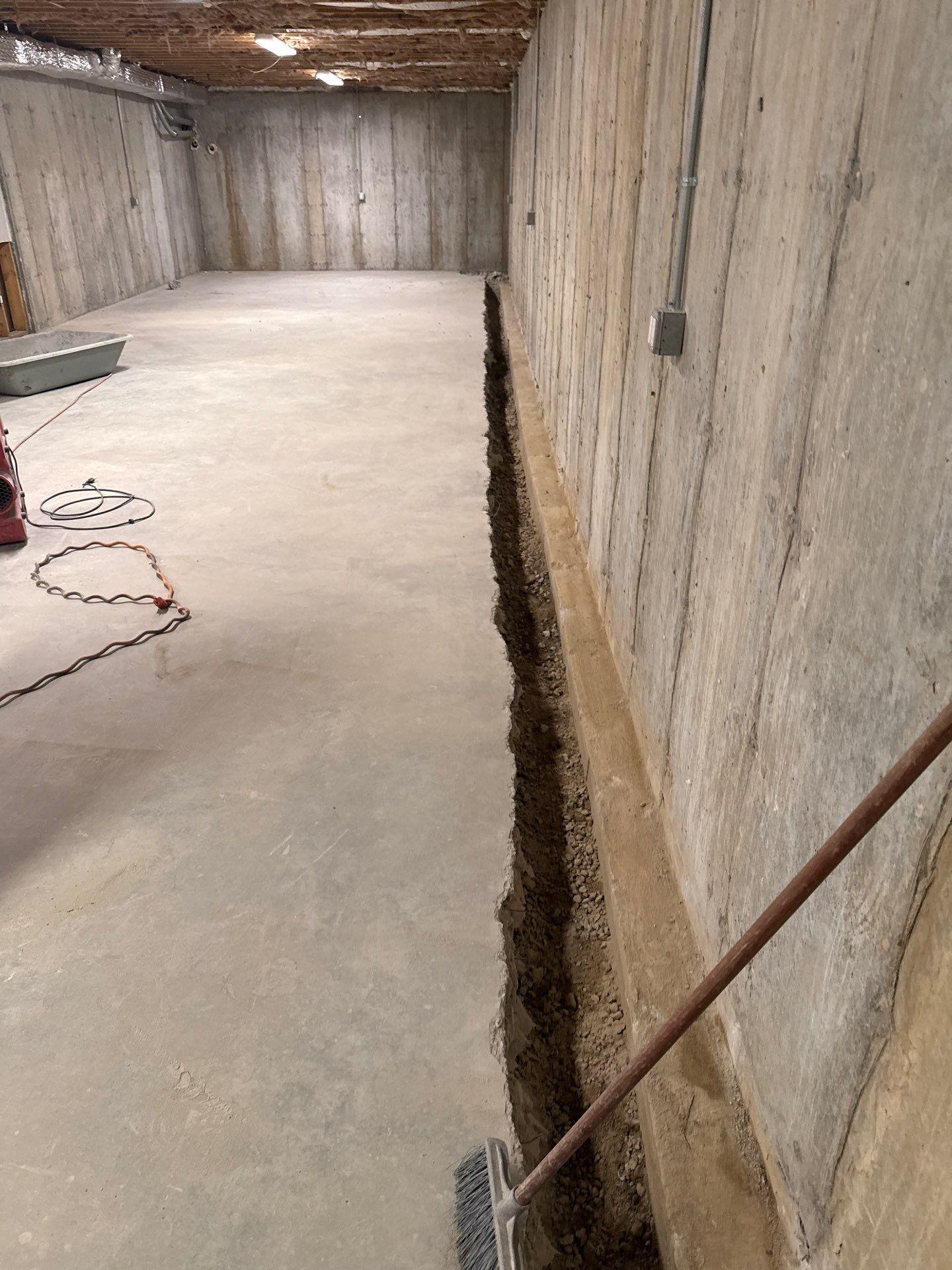
French drains are one of the most reliable interior waterproofing systems available, and they’ve been protecting homes for well over a century. The concept is straightforward: a perforated pipe is installed in a trench along the interior perimeter of your basement, beneath the floor slab. Gravel surrounds the pipe to facilitate water flow.
How They Work
When water seeps through your foundation walls or rises through the floor, it flows into the gravel bed and enters the perforated pipe. The pipe channels this water by gravity toward a collection point — typically a sump pit — where it’s pumped safely away from your home. This system intercepts water before it ever has a chance to pool on your basement floor.
Why They’re So Effective
Interior French drains address the root cause of most basement water problems by managing hydrostatic pressure from the inside. They work quietly and continuously, requiring minimal maintenance once properly installed. For homeowners concerned about mold prevention basement strategies, French drains are foundational because they eliminate the standing water and persistent dampness that mold needs to thrive.
At Sundahl Waterproofing, French drain installation is one of our most frequently recommended basement waterproofing services because of its proven track record in homes throughout our service area.
Channel Drainage for Basement Perimeters
Channel drainage systems offer another effective approach to managing water that enters at the joint where your basement wall meets the floor. These systems use a specially designed channel or track mounted along the base of the wall to capture water as it seeps in.
Best Applications
Channel drains work particularly well in basements where water enters primarily through the wall-floor joint rather than rising up through the slab. They can be installed with less disruption than a full French drain system, making them an excellent option for certain types of water intrusion.
Like French drains, channel systems direct captured water to a sump pit for removal. They’re often part of a comprehensive wet basement repair plan that addresses multiple entry points simultaneously.
Combining Drainage with Sump Pump Systems
Drainage channels and pipes collect water, but they need somewhere to send it. That’s where sump pump installation becomes essential. A sump pump is the engine that drives your entire basement drainage system, actively removing water from your home and discharging it safely away from the foundation.
How Sump Pumps Complete the System
Water collected by your French drain or channel system flows into a sump pit — a basin set into your basement floor. When water in the pit reaches a certain level, the pump activates automatically and pushes the water through a discharge pipe to the exterior of your home. The best systems include a battery backup so your basement stays protected even during power outages, which often coincide with the heavy storms that produce the most water.
Choosing the Right Pump
Not all sump pumps are created equal. The right pump for your home depends on the volume of water your basement typically receives, the vertical distance the water needs to travel, and the length of the discharge line. Our team at Sundahl Waterproofing carefully sizes every sump pump installation to match the specific demands of your home, ensuring reliable performance when you need it most.
Choosing the Right Drainage Solution for Your Home
Every basement is different, and the best basement drainage solutions are always tailored to the specific conditions of your home. Here are the key factors that guide the decision-making process:
Assess Where Water Is Entering
Is water coming through wall cracks, the wall-floor joint, up through the floor, or a combination? The entry points determine which drainage approach — or combination of approaches — will be most effective for your basement water damage protection.
Consider the Volume of Water
A basement that gets slightly damp during heavy rain requires a different solution than one that experiences significant flooding. Higher volumes typically call for more robust French drain systems paired with appropriately sized sump pumps.
Evaluate Your Foundation Type
Poured concrete, block, and stone foundations each present unique challenges and opportunities. An experienced residential waterproofing contractor understands these differences and designs systems accordingly.
Think Long-Term
The most cost-effective solution is one that works permanently. Investing in professional interior waterproofing systems now prevents the recurring costs of water damage, mold remediation, and temporary fixes that never quite solve the problem.
Professional Installation vs DIY Approaches
It’s natural to wonder whether basement drainage is a project you can tackle yourself. While some surface-level improvements like regrading soil or extending downspouts are reasonable DIY tasks, interior drainage systems require professional expertise for several important reasons.
Why Professional Installation Matters
Installing a French drain system involves cutting concrete, excavating beneath your slab, properly pitching drainage pipes, and integrating everything with a sump pump system. Mistakes in any of these steps can leave you with a system that doesn’t work — or worse, one that creates new problems. Professional home waterproofing specialists bring the tools, training, and experience to get it right the first time.
The Value of a Proper Assessment
Perhaps even more important than the installation itself is the initial assessment. A professional evaluation identifies all the sources of water intrusion in your basement, not just the obvious ones. This comprehensive understanding is what separates a solution that lasts from one that merely delays the problem. Sundahl Waterproofing provides thorough, no-pressure assessments for homeowners throughout our service area, including Dutchess, Fairfield, Middlesex, New Haven, Putnam, and Westchester Counties.
Warranties and Peace of Mind
Professional basement waterproofing services come with warranties that protect your investment. When you work with a trusted contractor, you gain the confidence of knowing that your system is backed by both expertise and a commitment to your satisfaction. Effective mold prevention basement care and lasting foundation waterproofing are outcomes that require professional-grade solutions.
Ready for a Permanently Dry Basement?
Sundahl Waterproofing has been helping homeowners across Westchester, Fairfield, and surrounding counties solve basement water problems with proven drainage solutions. We’ll assess your situation, explain your options clearly, and deliver results that last — with no high-pressure sales tactics. Contact us today for your free, no-obligation consultation.