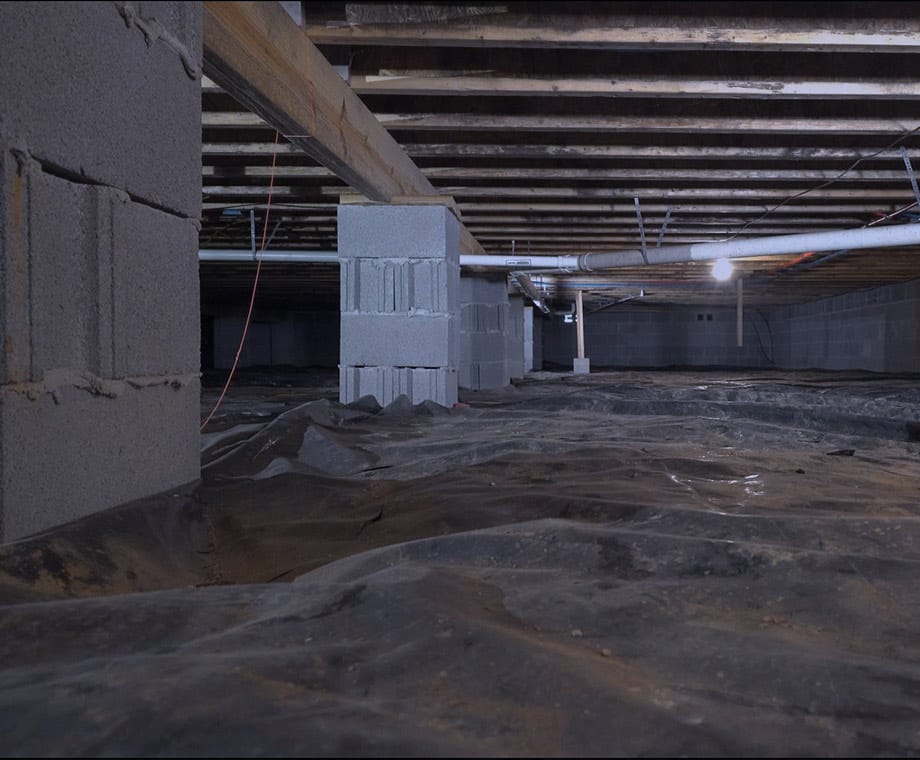
For many homeowners with a pier-and-beam or stem-wall foundation, a silent, structural crisis is developing just inches beneath their feet. Because crawlspaces are dark, cramped, and rarely visited, they are easily ignored. However, an untreated, dirt-floor crawlspace acts as a continuous moisture engine, pumping gallons of water vapor directly into your home’s structural framing. When this subsurface moisture level rises unchecked, it invites the most destructive organism a wood-framed house can face: structural dry rot.
Ignoring this hidden space doesn’t just put your floor joists at risk; it directly compromises the air quality of your living room. Thanks to a natural architectural phenomenon known as the “Stack Effect,” hot air rising through the upper floors of a home creates a vacuum that pulls up to 50% of its ground-floor air straight out of the damp crawlspace. To permanently protect your home’s structural integrity and your family’s health, you must shift from a reactive mindset to a preventative engineering solution: true crawlspace encapsulation.

How Crawlspace Moisture Destroys Your Home’s Framing
Unsealed crawlspaces are inherently vulnerable to water accumulation through capillary action (water wicking up through the dirt floor) and ambient vapor transmission. When humid air enters traditional foundation vents, it collides with the cooler, shaded temperatures under the house, causing immediate condensation along wood beams and masonry piers.
This perpetual dampness creates the ideal breeding ground for wood-destroying fungi, specifically dry rot. Despite its misleading name, dry rot requires a wood moisture content of about 20% to germinate. Once established, the fungi consume the structural cellulose within the timber, causing the wood to shrink, crack across the grain, and break down into brittle, useless cubes. By the time you notice a bouncy kitchen floor upstairs, the support joists below may have already lost their load-bearing capacity.
The 4 Strategic Layers of a True Encapsulation System
True encapsulation does not mean simply throwing a loose plastic sheet over a dirt floor. It is a comprehensive, engineered barrier system designed to isolate your home entirely from sub-floor moisture. A code-compliant, professional configuration relies on four highly integrated layers:
1. Water Mitigation and Drainage Infrastructure
Before any sealing occurs, existing water problems must be permanently resolved. If groundwater actively pools in the space during heavy rains, a professional team installs a subsurface interior perimeter drainage channel paired with a high-capacity commercial sump pump. This ensures that any rising water table is captured and automatically discharged safely away from the foundation before it can touch the barrier system.
2. High-Mil Polyethylene Vapor Barrier
The foundation of the encapsulation process is a heavy-duty, puncture-resistant white liner (typically 12 to 20 mil thick). Unlike thin hardware-store plastic that tears easily and traps sour odors, this commercial-grade membrane is designed to withstand decades of foot traffic. It is laid smoothly across the earth floor, wrapped seamlessly up all structural masonry piers, and mechanically fastened and sealed along the foundation walls using heavy-duty sealing tape.
3. Complete Vent Insulation and Sealing
For decades, building codes incorrectly required open foundation vents under the assumption that airflow would dry out moisture. Modern building science has disproven this; open vents actually introduce hot, humid summer air that condenses directly on cold wood framing. True encapsulation requires completely closing, sealing, and insulating these vents to establish absolute climate control inside the envelope.
4. Dedicated Sub-Floor Dehumidification
The final element is balancing the air inside the sealed space. A heavy-duty, self-draining crawlspace dehumidifier is deployed to maintain relative humidity strictly between 50% and 55%. This specific threshold is critical: it is low enough to completely arrest the growth of dry rot and mold yet balanced enough to prevent wood framing from over-drying and splitting.
The Financial ROI: Why Encapsulation is a Wise Capital Investment
While crawlspace encapsulation represents a significant upfront property investment, it delivers clear, measurable returns in home asset protection and operational savings:
- Structural Value Protection: It eliminates the need for incredibly invasive, high-cost structural repairs, such as sistering rotten beams or completely replacing subfloor framing assemblies.
- HVAC Efficiency Gains: A stabilized, insulated crawlspace means your heating and cooling systems no longer have to work double-time to combat extreme under-floor temperatures, reducing monthly household utility costs by up to 15% to 20%.
- Real Estate Market Value: A fully encapsulated crawlspace backed by a transferable structural warranty is a massive asset during real estate transactions, providing home buyers and strict inspectors with immediate peace of mind.
Frequently Asked Questions About Crawlspace Preservation
Can crawlspace encapsulation fix floors that are already sagging?
No. Encapsulation is designed to eliminate moisture and halt the progression of structural decay, but it cannot mechanically reverse wood structural damage that has already occurred. If your floor joists are already rotten or sagging, they must be structurally jacked, stabilized, and reinforced with heavy-duty adjustable support columns during the encapsulation installation process.
Does encapsulation completely eliminate musty odors inside the house?
Yes. By isolating the raw earth floor and controlling internal humidity levels, you permanently stop the organic off-gassing produced by soil microbes and mold colonies. This effectively cuts off the source of the sour, damp odors that travel upward into your living spaces via the stack effect.
How long does a professional crawlspace encapsulation project take to complete?
Depending on the total square footage of the home, available clearance heights, and the volume of old insulation or debris removal required, a professional, highly trained team can typically clean, line, seal, and balance a residential crawl space within three to five business days.
Stop letting invisible sub-floor moisture compromise your home’s structural foundation and indoor air quality. Skip the aggressive sales tactics of corporate franchise networks and experience honest, diagnostic-driven transparency. Contact the structural preservation specialists at Sundahl Waterproofing today to schedule a detailed, comprehensive crawlspace inspection.