Real Stories: How Crawlspace Encapsulation Saved Homes From Damage
Have you ever thought about the hidden corners of your home, like your crawlspace, and the potential risks they carry? Consider the Johnson family who faced escalating repair costs due to a neglected crawlspace. After encapsulating the space, they boosted their indoor air quality and even increased their home’s market value. Intriguing, isn’t it? But before you scamper off to inspect your own crawlspace, let’s discuss some real-life examples of how crawlspace encapsulation can save your home from significant damage.
Key Takeaways
- Crawlspace encapsulation can prevent structural damage, such as wood rot, by controlling moisture and reducing dampness.
- Neglected crawlspaces can lead to high energy costs and poor indoor air quality; encapsulation enhances insulation, potentially saving on energy.
- Encapsulation can halt mold infestations, which pose health risks and decrease property value, by creating an unfavorable environment for mold growth.
- The encapsulation process involves sealing off the crawlspace completely, often with air conditioning to prevent condensation and subsequent mold formation.
- Real-life cases, like Jane and Roger’s, show encapsulation improving air quality and eliminating mold-related health issues, proving the method’s effectiveness.
Understanding Crawlspace Encapsulation
Let’s dive right into understanding crawlspace encapsulation. This process involves the use of a heavy-duty polyethylene barrier to completely cover your crawlspace. This includes the floors, foundation walls, and possibly even the ceiling.
Why go through all this trouble, you may ask? The answer is simple: moisture control.
You see, crawlspaces are notorious for their dampness, and this moisture can lead to a host of problems for your home. By encapsulating the space, you’re creating a moisture barrier that keeps that dampness out, thereby protecting your home. This barrier not only blocks moisture but also helps to insulate your home, which can lead to energy savings in the long run.
Once your crawlspace is encapsulated, you won’t have to worry about those musty odors that often permeate from damp, neglected crawlspaces.
The encapsulation process also helps to deter pests, as many insects and rodents are attracted to damp environments.
The Dangers of a Neglected Crawlspace
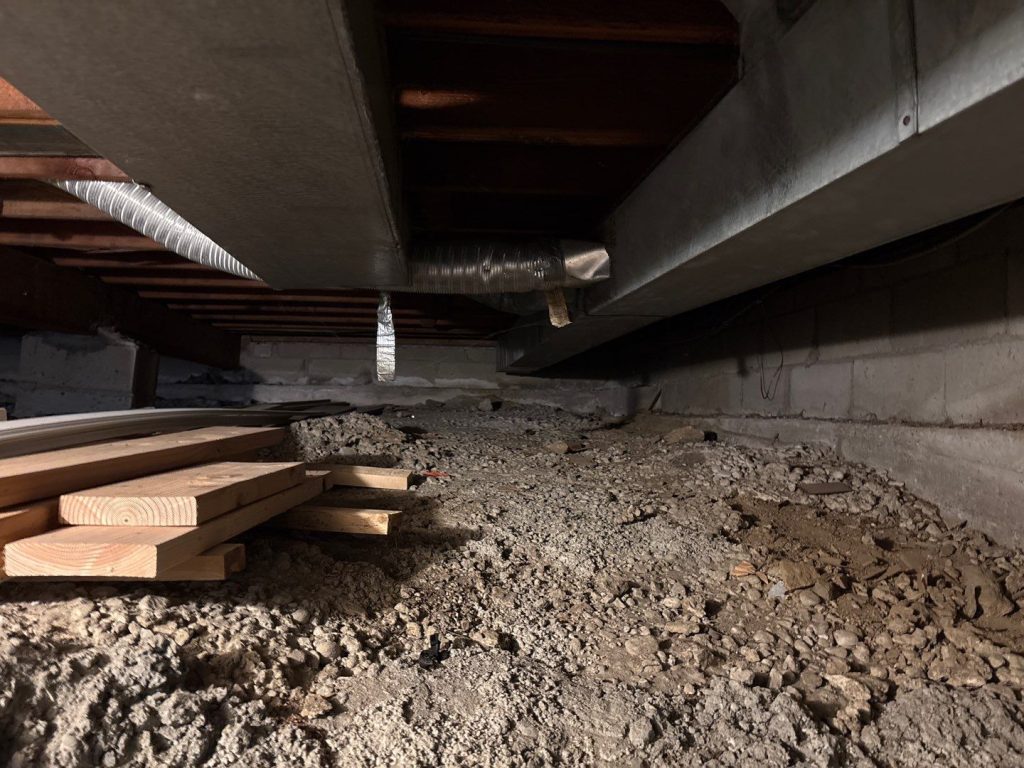
Without proper care, your crawlspace can become a catalyst for serious problems in your home.
It’s not just an out-of-sight, out-of-mind area. Neglecting it can lead to structural damage, high energy costs, and poor indoor air quality.
Imagine the foundation of your home slowly decaying. That’s what happens when moisture seeps into your crawlspace, leading to wood rot and deterioration of your home’s structural integrity.
It’s a sneaky issue; you don’t see it until it’s too late and costly repairs are needed.
Did you know that up to 50% of your home’s air comes from your crawlspace? If it’s filled with dust, allergens, and harmful gases, your indoor air quality plummets.
You’re breathing in unhealthy air without even realizing it.
Noticing an unusually high energy bill? A neglected crawlspace might be the culprit.
Without proper insulation and sealing, your HVAC system works overtime, hiking up your energy costs.
In short, a neglected crawlspace isn’t just a hidden problem—it’s a ticking time bomb.
Next, we’ll explore real-life stories showing how encapsulation saved homes and health.
Real Story #1: Combating Mold Invasion
Let’s take a look at a real-life scenario where mold infestation wreaked havoc in a neglected crawlspace.
You’ll see how the damaging impact of mold can be quite severe, affecting not just the crawlspace, but the entire home.
Then, we’ll explore how encapsulation can be the ultimate solution to this persistent problem.
Identifying Mold Infestation
Hundreds of homeowners struggle with identifying mold infestations, but not John. After enduring persistent allergies, he decided to investigate his crawlspace. Below his home, he discovered a moldy nightmare, a sight you’d fear as well.
You might wonder, how did John spot the mold? First, he noticed a strange, musty odor. Mold often emits an unpleasant smell before it’s visible.
Second, John saw irregular, fuzzy spots of various colors. Mold isn’t always black; it can be green, white, or even orange.
Third, he felt an unusual dampness in his crawlspace. Mold thrives in moist environments, so dampness often signals its presence.
You can follow John’s steps to identify mold in your home. Be observant of unusual smells and look for discoloration or dampness, particularly in your crawlspace. Having a flashlight handy can aid in your search.
Mold’s Damaging Impact
In the grip of a mold invasion, John quickly realized the damaging impact it could have on his home. The damp, musty odor was just an initial sign of the more profound problems lurking beneath.
Mold, a silent destroyer, doesn’t just ruin the aesthetics of your place, it poses serious health risks too.
- Health Hazards: You’re dealing with constant allergies, respiratory issues, and skin irritations. You can’t pinpoint why, but your home’s mold issue is the invisible culprit. Mold spores in the air are silently wreaking havoc on your health.
- Structural Damage: Imagine your wooden structures slowly rotting away. The drywalls are softening, and your home’s integrity is at stake. Mold’s destructive nature is eating away at your abode from the inside out.
- Decreased Property Value: If you’re planning to sell, mold can be a deal-breaker. Potential buyers won’t look twice at a property with a mold problem. It’s an immediate red flag, lowering the value of your house considerably.
A mold invasion isn’t just ugly; it’s destructive. Recognizing its damaging impact is the first step towards combating it. After all, you can’t fight what you don’t know.
Encapsulation: The Solution
Facing a mold invasion can feel like an uphill battle, but encapsulation offers a solution.
Let’s examine a real-life scenario. Imagine you’re a homeowner in humid Florida, and despite your best efforts, mold keeps creeping up in your crawlspace. You’ve tried everything, from dehumidifiers to rigorous cleaning, yet the mold persists. It’s damaging your home and threatening your health.
Then, you discover crawlspace encapsulation. It’s a process where a professional seals your entire crawlspace with a vapor barrier. This barrier prevents moisture from seeping in, making it an unfavorable environment for mold growth. You decide to give it a try.
Post-encapsulation, you notice a significant change. The musty odor is gone, and so is the mold. Your crawlspace is now dry and clean, with no signs of the previous invaders.
The encapsulation not only eradicates the existing mold but also prevents future infestations. It’s like a shield protecting your home from damage.
Crawlspace encapsulation proves to be the solution you’ve needed all along. It’s more than just mold control; it’s a long-term fix that safeguards your home, making it a healthier and safer place for you and your family.
Real Story #2: Stabilizing Structural Integrity
You’ve seen how encapsulation combats mold, but let’s now turn to another essential aspect: your home’s structural integrity.
Spotting structural weaknesses early is key and can save you from costly repairs down the line.
Let’s explore how encapsulation plays a protective role in this process.
Identifying Structural Weaknesses
Peering into the dark recesses of your crawlspace, it’s easy to overlook structural weaknesses that could compromise your home’s integrity.
But don’t be deceived, hidden beneath the surface, these potential threats lurk, waiting to wreak havoc on your peaceful abode. You may not know it, but these structural weaknesses are the silent assassins of your home’s stability.
Now, let’s bring these hidden hazards to light:
- Uneven Floors or Walls: If you’ve noticed your floors are starting to sag or your walls are bulging, it’s a clear sign of structural weakness in your crawlspace.
Don’t ignore it, because it’s an early warning sign that your home’s foundation is under stress.
- Cracks in the Foundation: Cracks in your foundation aren’t just cosmetic issues, they’re serious structural problems.
They indicate that your home’s foundation may be shifting, which can lead to significant structural damage over time.
- Dampness or Mold: Dampness or mold in your crawlspace is a sign of poor ventilation.
This can lead to wood rot and compromise the structural integrity of your home.
Encapsulation’s Protective Role
Having uncovered the hidden threats to your home’s structural integrity, it’s time to explore how encapsulation can play a protective role. When moisture seeps into your crawlspace, it doesn’t just sit there. It creeps up into the structure of your home, eating away at wood, corroding metal, and fostering mold growth. This is where encapsulation steps in.
By creating a moisture-proof barrier, encapsulation shields your home’s substructure from these destructive elements. The encapsulation process involves sealing off your crawlspace completely. It’s not just about laying down a plastic sheet. It’s about installing a durable, high-quality vapor barrier that’s anchored securely to your crawlspace walls, blocking moisture from penetrating the structure.
But encapsulation doesn’t stop there. It also involves conditioning the air in your crawlspace to maintain a stable environment. This prevents temperature fluctuations that can cause condensation and further damage.
It’s a robust defense system that helps preserve your home’s structural integrity.
Real Story #3: Improving Indoor Air Quality
In the domain of home improvement, enhancing indoor air quality mightn’t be your first thought. However, let’s explore a real-life story where crawlspace encapsulation drastically improved air quality and, consequently, the homeowners’ health.
Meet Jane and Roger, a lovely couple living in a 50-year-old home. They were constantly battling allergies, despite maintaining an impeccably clean house. It was a mystery until they discovered their crawlspace was filled with mold and mildew, polluting their indoor air.
- The Diagnosis: Professional inspectors found the root of their health issues in the damp, mold-infested crawlspace. The contaminated air was seeping into their living space, triggering their allergies.
- The Solution: They decided to encapsulate their crawlspace, a process that involves sealing it off from outside elements.
- The Result: Post encapsulation, their indoor air quality improved dramatically. The musty smell disappeared, and their allergies ceased.
Crawlspace encapsulation not only saved their home from structural damage but also improved their quality of life. It’s a reminder that sometimes, the solutions to our biggest problems lie in the least expected places.
Up next, we’ll explore the factors to reflect on in encapsulation, so you too can experience these benefits.
Factors to Consider in Encapsulation
Before you too can breathe easier in a healthier home like Jane and Roger, there are several factors you’ll need to contemplate when planning crawlspace encapsulation. These factors aren’t just about the encapsulation process itself, but also about the conditions of your home and the quality of service you’ll receive.
| Factors | Consideration | Importance |
|---|---|---|
| Home’s Condition | Consider the existing state of your crawlspace, its size, and the presence of any pre-existing damage or mold. | These will affect the amount of work needed, and hence the cost. |
| Quality of Materials | The type and quality of the vapor barrier and other materials used in the encapsulation are essential. | High-quality materials guarantee longevity and effectiveness of the encapsulation. |
| Service Provider | The expertise and reputation of your chosen professional encapsulation service. | A reliable and experienced provider will guarantee the work is done properly and efficiently. |
| Maintenance | Post-encapsulation maintenance is necessary. | Regular checks help detect issues early, preventing costly repairs. |
| Cost | The overall cost of the project including materials, labor, and maintenance. | Understanding the cost helps in budgeting and evaluating if encapsulation is a viable solution for your home. |
Keep these factors in mind, and you’re set for a successful encapsulation project.
Encapsulation: An Investment Worth Making
You might balk at the initial cost of crawlspace encapsulation, but it’s an investment that pays off in the long run.
Not only does it protect your home from moisture and pest damage, it can also increase your property’s value.
Think of it as a protective shield, keeping the harmful elements at bay while giving your home a boost in the real estate market.
 Let’s break down the benefits into three clear points:
- Moisture Control: Encapsulation seals off your crawlspace from the damp earth, preventing mold growth and wood rot.
This maintains the structural integrity of your home, saving you from costly repairs in the future.
- Pest Prevention: By creating a barrier against the outside, encapsulation keeps out pests that could damage your home’s foundation or create an unhealthy living environment.
No more worrying about termites or rodents!
- Increased Home Value: With a well-maintained crawlspace, your property becomes more attractive to potential buyers.
It’s a sign that you’ve taken good care of your home, making it a solid investment for them.
So, you’ve seen how crawlspace encapsulation can be a game changer. It’s not just about fighting mold or enhancing structural integrity, it’s also about boosting air quality and ultimately, your health. Don’t overlook this effective solution. Consider the factors, make the investment, and safeguard your home’s value. Remember, a healthy home isn’t a luxury, it’s a necessity. And with encapsulation, you’re just a step away from that peace of mind.