
Sump Pit
How Deep Should a Sump Pit Be?
When you’re considering the depth of your sump pit, you’ve got to take into account factors like soil type and the level of the groundwater. Pits in sandy soils typically need to be deeper, while clay soils can get away with shallower pits. You’ll also need to measure the diameter of your sump pump, noting its ‘on’ and ‘off’ points, and add an extra six inches for safe measure. Now, you’re probably wondering where to start. Well, let’s explore the specifics so you can guarantee your sump pit is the perfect depth for your needs.
Key Takeaways
- Sump pit depth depends on factors like soil type and geographic location.
- Sandy soil often requires deeper pits for quick drainage, while clay soil may need shallower pits.
- Flood-prone or high water table areas typically demand deeper sump pits.
- The sump pump size, based on home’s square footage and water table, also influences pit depth.
- Ideal depth can be measured by recording pump’s “on” and “off” points, adding 6 inches for flexibility.
 Understanding the Role of a Sump Pit
 Understanding the Role of a Sump Pit
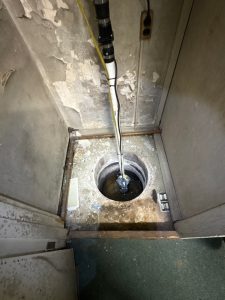
Diving into the details, a sump pit plays a crucial role in maintaining the dryness of your home. It’s fundamentally a hole dug in the lowest part of your basement or crawl space, purposed to collect excess groundwater and prevent it from flooding your home.
How does it work? Well, it’s quite simple. When water seeps into your home’s foundation, it’s directed into the sump pit. Once the water in the pit reaches a certain level, it triggers a sump pump. The pump then springs into action, ejecting the water out of your home and keeping your property dry.
But it’s not just about preventing water damage. A properly functioning sump pit also contributes to the health and comfort of your home. It inhibits the growth of mold and mildew, which thrive in damp environments, and can lead to respiratory health problems.
It also keeps your home’s foundation safe from water damage, ensuring the longevity of your home. In summary, a sump pit is like a watchdog, always on guard to protect your home from the dangers of water damage.
Factors Influencing Sump Pit Depth
While the role of a sump pit in safeguarding your home from water damage is indisputable, the effectiveness of this system heavily hinges on one key aspect: its depth. But what factors influence this depth? The answer isn’t as simple as you might think.
The type of soil in your home’s foundation is a primary determinant of your sump pit’s depth. Sandy soil types, for instance, allow water to drain quickly, meaning you’ll need a deeper pit to handle the rapid influx of water. Conversely, clayey soil retains water longer, so a shallower pit may suffice.
| Soil Type | Sump Pit Depth |
|---|---|
| Sandy | Deeper |
| Clayey | Shallower |
Your home’s geographical location and its propensity for heavy rainfall or flooding also play significant roles. Homes in flood-prone areas or areas with high rainfall need deeper pits to cope with the excess water.
| Location Factor | Sump Pit Depth |
|---|---|
| High Rainfall/Flooding | Deeper |
| Low Rainfall/Less Flooding | Shallower |
Therefore, you can’t determine your sump pit’s depth without considering these variables. It’s not just about digging; it’s about digging smart.
Determining Your Sump Pump Size
 Determining Your Sump Pump Size
Understanding the correct size for your sump pump is as essential as figuring out the depth of your sump pit. You need to make sure your pump’s capacity matches your home’s needs. If it’s too small, it may not handle heavy rainfalls, causing your basement to flood. If it’s too large, it may work harder than necessary, shortening its lifespan.
Firstly, consider your home’s square footage. The general rule is that for homes up to 1000 square feet, a 1/3 horsepower pump should suffice. If your home is larger, consider moving up to a 1/2 horsepower pump.
Next, think about the water table in your area. If it’s high, you’ll need a more powerful pump.
Check with your local municipality or a geotechnical engineer to get accurate information.
Soil Type and Groundwater Level Impact
The type of soil your home is built upon and the level of groundwater in your area play essential roles in the performance of your sump pump and the depth of your sump pit.
You’ve got to understand that different soil types have different absorption rates. For instance, sandy soil drains water quickly while clay retains it. If you’re on sandy soil, you’ll likely need a deeper pit.
Now let’s consider groundwater levels. If you’re in an area with a high water table, meaning groundwater is near the surface, you’ll likely experience more frequent flooding.
This means your sump pump will work harder and your pit might need to be deeper to handle the volume of water. Conversely, in a low water table area, you may not need as deep a pit.
Steps to Measure Ideal Sump Pit Depth
With your soil type and groundwater level in mind, it’s time to get down to the nitty-gritty – measuring your sump pit’s ideal depth. You’ll need a measuring tape, a marker, and a keen eye. The process isn’t complex, but precision is key.
Start by measuring the diameter of your sump pump – this will help determine the ideal width of your pit. Then, measure your pump’s “on” and “off” points to determine the minimum pit depth. Add about 6 inches to this measurement to allow for some wiggle room.
Here’s a simple table to help you visualize your measurements:
| Measurements | Ideal Value | Notes |
|---|---|---|
| Pump Diameter | Varies | Determines Pit Width |
| On Point | Varies | Part of Minimum Depth |
| Off Point | Varies | Part of Minimum Depth |
| Extra Space | 6 inches | Allows for Error |
Don’t forget to factor in the type of soil and groundwater level. These aspects can affect your sump pit’s performance. By taking the time to measure correctly, you’re setting the foundation for a sump pit that’s a perfect fit for your home.
So, how deep should your sump pit be? It depends on factors like your soil type and groundwater level, as well as your sump pump’s size. Remember, sandy soils typically require deeper pits while clay soils might need less depth. Always measure your sump pump’s diameter and note its “on” and “off” points, adding six inches for good measure. Get these measurements right for the best performance and to keep your basement flood-free.