
BLOG
When living in a historic home, you’re not just dealing with everyday maintenance, but also preserving a piece of history. One of the challenges you’ll face is basement waterproofing. Traditional methods might work, yet they can compromise the architectural integrity of your home. On the other hand, exterior solutions can offer robust protection, but do they suit the unique needs of your historic home? It’s a tightrope you’re walking, isn’t it? As you weigh your options, let’s explore and discuss more about these waterproofing methods and their implications for your precious property.
Key Takeaways
- Select waterproofing methods that align with the architectural integrity of historic homes, considering material compatibility and preservation needs.
- Consider traditional and modern waterproofing solutions such as interior water drainage systems, concrete coatings, and exterior wall coatings suited for older structures.
- Choose durable, long-lasting materials that can withstand environmental stress while preserving the original architecture of the historic home.
- Assess the cost-effectiveness of materials and methods, considering potential long-term savings from preventing extensive structural repairs and mold remediation.
- Hire professional services with expertise in historic homes for effective waterproofing, ensuring their credibility and maintaining clear communication for project expectations.
Understanding Historic Home Architecture
 Peering at the grand facade of a historic home, you might find yourself immersed in a story of architectural marvel. You’ll notice the intricate details, the ornate carvings, and the distinct markings of time that are all a reflection of the craftsmanship of the era.
Each historical period has its unique architectural style that reflects the sociopolitical climate of the time. You’ll see Greek Revival with its massive columns, Victorian with its elaborate ornamentation, or perhaps Colonial with its symmetry and simplicity.
The real beauty, however, isn’t just in the styles themselves, but in the interplay of these styles and the way they’ve evolved over the years.
The materials used in these homes are also of historical significance. Brick, stone, wood, or stucco, each has its own story to tell.
But remember, with age comes potential problems. Don’t get so lost in the beauty of the architecture that you forget to inspect the structural integrity of the home. Always be vigilant, because beneath the grandeur may lurk issues that you’ll have to address, like basement waterproofing.
But that’s a topic for another time. For now, enjoy the architectural feast before your eyes.
The Importance of Basement Waterproofing
Your home’s basement is more than just a storage space. It’s a vital part of your home’s structural integrity. If left unchecked, water can seep into your basement, leading to costly damage.
Waterproofing your basement isn’t just about preventing damage, it’s about maintaining the value of your historic home. Water intrusion can lead to a variety of issues, including mold growth, rotting wood, and even structural instability.
These problems can greatly devalue your home and make it less attractive to potential buyers. Moreover, a damp, leaky basement can also lead to health problems for you and your family. Mold and mildew can trigger allergies or even cause respiratory problems.
Waterproofing your basement can eliminate these health risks and provide a safer, healthier environment for your family. You might think that waterproofing is too expensive or not worth the effort, but consider the cost of not doing it.
The price of fixing structural damage or mold remediation can far outweigh the upfront cost of basement waterproofing.
Traditional Waterproofing Methods
When it comes to traditional waterproofing, there are several proven methods that have stood the test of time. You might be familiar with some of these, but it’s worth reviewing them to guarantee you’re making the best choice for your historic home.
First off, there’s interior water drainage. This method involves installing a drainage system underneath your basement floor to divert water away from the foundation. This is a great way to manage water that’s already found its way into your basement.
Next, there’s the sump pump method. This device pumps water out of your basement and away from your home. It’s a reliable method, but it does require regular maintenance to guarantee it’s functioning properly.
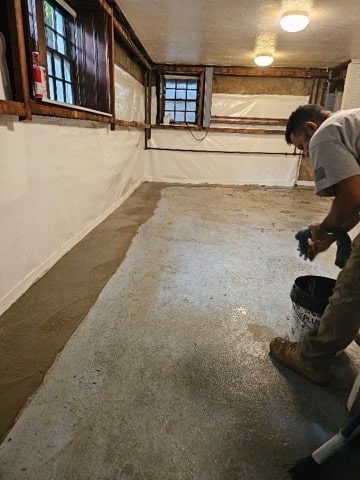
Lastly, there’s concrete waterproofing coatings. These are thick coatings that are applied to the interior of your basement walls to prevent water penetration. It’s a simple, yet effective method. However, it can’t be applied to previously painted surfaces.
Exterior Waterproofing Solutions
Now that we’ve covered the traditional methods of interior waterproofing, let’s shift our attention to exterior solutions. This approach focuses on preventing water from entering your home in the first place. You can’t control the weather, but you can control how it affects your historic home.
The first line of defense is exterior wall coatings. These are waterproof barriers applied directly to the exterior walls. They’re designed to prevent water from seeping through the wall material. Next, consider exterior drainage systems. They’re installed around the perimeter of your house to divert water away before it can penetrate the walls.
Lastly, look into foundation coatings and membranes. They’re applied to the outside of the foundation and create a waterproof barrier. Here’s a handy comparison of these methods:
| Exterior Waterproofing Solution | Advantage |
|---|---|
| Exterior wall coatings | Direct water barrier |
| Exterior drainage systems | Diverts water away |
| Foundation coatings | Waterproofs foundation |
Interior Waterproofing Strategies
Now, let’s switch gears to interior waterproofing strategies.
You’ll need to contemplate effective sealants for your basement, as well as appropriate drainage solutions.
These aspects are essential to maintaining a dry and healthy basement environment.
Choosing Interior Sealants
The decision to choose the right interior sealant for your basement waterproofing project is a crucial one. You don’t want to rush this process. The wrong choice could lead to future damage, costing you time, money, and possibly even structural integrity.
When you’re browsing your options, you’ll encounter a variety of sealants – from concrete sealers to waterproofing paints. Each has its own strengths and limitations.
Concrete sealers, for example, are excellent at blocking out moisture, but they mightn’t adhere well to older, cracked surfaces. Waterproofing paints, on the other hand, can fill in those small cracks, but they may not provide the same level of moisture resistance.
You’ll need to take into account your specific situation. What’s the condition of your basement walls? Are they smooth or cracked? How severe is your moisture problem? Answering these questions will help guide your sealant selection.
Don’t forget to consult with professionals, too. They can provide insights and recommendations based on their experience with other historic homes.
Taking the time to choose the right sealant will guarantee your basement stays dry and your home’s history stays preserved.
Installing Drainage Solutions
Having chosen the right sealant, you’re ready to tackle the next major step in your basement waterproofing project – installing an effective drainage solution.
Interior drainage systems are a crucial part of any basement waterproofing strategy, especially for historic homes. These systems help to channel any water that does make its way into your basement out again, preventing damage and keeping your basement dry.
When it comes to choosing a drainage solution, there are several options to evaluate:
- Interior French Drains: These are highly effective at collecting water from basement walls and directing it to a sump pump.
- Sump Pumps: These remove collected water from your basement, pumping it outside.
- Drain Tiles: Installed around the perimeter of your basement, these help to divert water away.
- Wall Conduits: These specialized pipes direct wall seepage into your drainage system.
Drainage Systems for Old Homes
While you may love the charm and character of an older home, it’s likely that the basement drainage system leaves a lot to be desired.
Don’t fret, though. There are various options available to retrofit a reliable drainage system into your historic home, which can help protect it from unwanted water damage.
Your first step is to assess the current system. Frequently, older homes rely on outdated clay pipes or have no drainage system at all.
You’ll need to upgrade these to modern PVC pipes to guarantee improved and reliable water flow.
Next, consider the type of drainage system that best fits your home’s needs. You could opt for a French drain, which is a trench filled with gravel or rock that redirects surface water away from your house.
Alternatively, a sump pump, typically installed in the lowest part of the basement, can effectively remove water that’s entered your home.
Choosing the Right Waterproofing Material

After deciding on a suitable drainage system for your historic home, finding the right waterproofing material becomes your next essential step.
Remember, you’re dealing with an older structure; you must take into account the material’s compatibility with your home’s unique characteristics.
It’s easy to get overwhelmed with the number of waterproofing materials available. But don’t fret, we’ve compiled a list of key factors to keep in mind:
- Compatibility with Your Home’s Structure: Some materials mightn’t be suitable for old houses. Research or consult with professionals to guarantee the product won’t harm your home’s foundation.
- Longevity and Durability: Opt for materials that offer long-term protection. You don’t want to redo the process after a short time.
- Ease of Application: Some materials require complex installation processes. If you’re DIYing, pick something manageable.
- Cost-effectiveness: Price matters. However, don’t compromise on quality. It’s better to invest in a slightly more expensive product that’ll last longer.
In a nutshell, choosing the right waterproofing material requires a balance between the property’s needs and your budget.
It’s a critical decision that’ll determine the success of your waterproofing project.
Hiring Professional Waterproofing Services
Maneuvering the world of basement waterproofing can be an intimidating task, especially when dealing with a historic home. That’s why hiring professional waterproofing services is often the best route to take.
Sure, you might be handy with tools, but the expertise of a professional can be invaluable. They’ve got the experience to handle unexpected issues, the knowledge to use the most suitable materials, and the skill to guarantee the job’s done right the first time.
Plus, they’re likely to have access to advanced equipment and products that aren’t readily available to the general public.
You’ll want to choose a company that specializes in historic homes. They’ll understand the unique challenges these properties present and know how to address them without compromising the structure’s integrity.
Ask for references, check their credentials, and don’t be shy about asking questions. It’s your home, after all.
So, you’ve got options when it comes to waterproofing your historic home’s basement. Whether it’s traditional methods, interior strategies, exterior solutions, or drainage systems, choosing the right material is essential. But don’t go at it alone. Get a professional on board, one experienced in historic preservation. They’ll guarantee your choices align with the unique needs of your home, keeping its architectural integrity intact while warding off water damage. Make the right move today.